
Exploring the Fun of Card Game Baseball
Stuck on a rainy day with nothing to do? The solution might be in your junk drawer: a standard deck of cards is your ticket to playing a full game of baseball right on your kitchen table. It’s the perfect way to pass the time, bring the family together, and enjoy the thrill of America’s pastime without leaving the house. To know more, check out CINTA78
Forget complicated rulebooks. This simple card game requires nothing more than a deck, a few coins for bases, and paper to track the score. The game’s biggest advantage is its speed; most people learn the rules in under five minutes and start playing their first inning immediately.
You don’t even need to be a baseball expert. While it’s a fantastic game for baseball fans, its real charm lies in its simplicity. If you have a general idea of hitting a ball and running bases to score, you have all the knowledge required. This guide explains what every card means—from an out to a home run—and how to move your runners around the diamond.
It’s all about the luck of the draw and the simple fun of “hitting” a grand slam with the flip of a card. Ready to play ball?
What You’ll Need to Set Up Your Ballpark
Getting started with Card Game Baseball is incredibly simple because you likely have everything you need right at home. There’s no complex board or game pieces, just a few common household items.
Here’s your game day checklist:
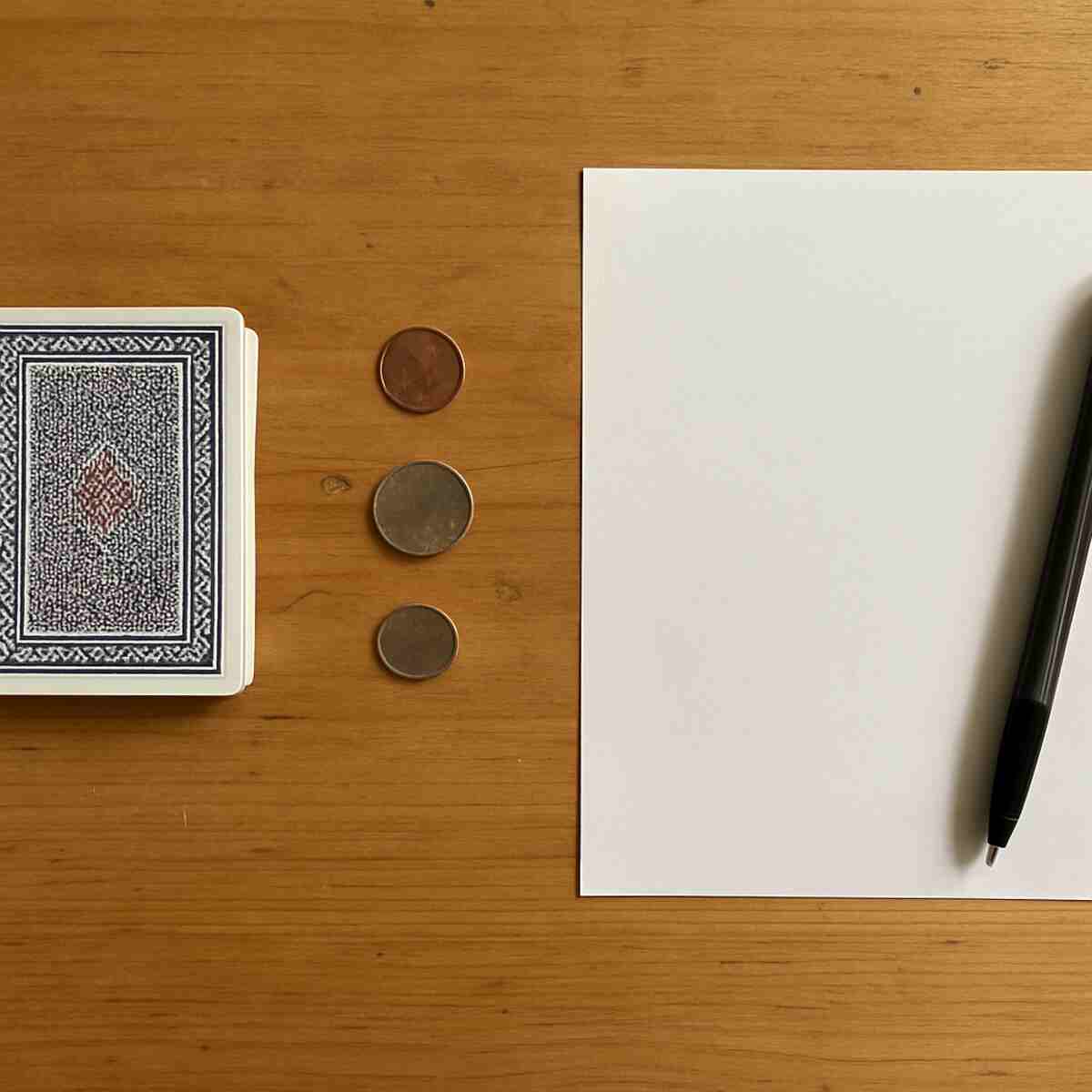
- A standard 52-card deck (no Jokers)
- Paper and pen for scorekeeping
- Four small objects for bases (coins, buttons, or even torn pieces of paper work great!)
Once you’ve gathered your gear, create your ballpark on any flat surface. Arrange your four small objects in a diamond shape to represent home plate, first base, second base, and third base. Keep your score sheet nearby where everyone can see it. Setting up your field takes less than a minute.
Finally, shuffle your deck of cards and place it face down. This deck is your “pitcher”—each card you draw represents a pitch. Unlike other card games, you don’t deal out hands. Instead, players will take turns drawing from this central deck. With your field set, it’s time to learn what each card means.
The Official Rulebook: What Each Card Means
In Card Game Baseball, every card you draw represents an action at the plate. Remember, suits (hearts, diamonds, clubs, spades) have no meaning. You only need to pay attention to the card’s number or face value. This simple rule is the key to the game, turning a complex deck into a straightforward set of baseball outcomes.
Think of the cards in three simple categories: Hits, Walks, and Outs. Here is the official breakdown for what each card does:
- Hits (Move Your Runners)
- Ace: Single (Advance 1 base)
- 2: Double (Advance 2 bases)
- 3: Triple (Advance 3 bases)
- 4: Home Run! (The batter and all runners on base score a run)
- Walks (A Free Pass)
- 5: Walk (Advance to 1st base)
- Outs (Your Turn at Bat is Over)
- 6, 7, 8, 9, 10: Strikeout (1 out)
- Jack, Queen, King: Foul Out (1 out)
When you draw a “hit” card like an Ace or a 2, you put a new runner on base and advance any existing runners. A “walk” gives you a free pass to first base. However, drawing any card from 6 through King results in an “out,” and that batter’s turn is over.
How to Take Your Turn at Bat
Think of the shuffled, face-down deck as the pitcher. To start your turn, or “at-bat,” simply draw the top card and flip it over. This single card reveals the outcome. As long as you keep getting hits or walks, your turn continues, and you’ll keep drawing cards.
When your turn begins, let’s imagine you draw an Ace. That’s a single! To show this, place a “runner” (a coin, button, etc.) on first base. Since you didn’t get an out, your turn isn’t over. You immediately draw another card for the next batter.
Of course, not every card is a hit. If the card you draw is anything from a 6 through a King, the result is an out. When this happens, that batter’s turn at the plate is over. You don’t get to place a runner or draw another card for that at-bat.
You continue drawing cards, one by one, adding new runners to the bases with each successful hit. Your time at the plate only ends when you draw a card that results in an out. Getting runners on base is only half the battle; the real excitement begins when you get another hit with runners already waiting.
How to Move Runners and Score a Run
Getting a runner on base is the first step, but the real fun starts when you get another hit. When a new batter gets a hit, any runners already on the bases get to advance, too. The rule is simple: every runner moves forward the same number of bases as the value of the hit. For example, if you have a runner on first base and you draw an Ace (a single), your runner moves one base to second, and your new batter takes their place on first. Suddenly, you have two players in scoring position!
This “base for base” movement creates exciting moments. Imagine you have a runner on first and you draw a 2 of Hearts, which is a double. Two things happen at once: your new batter immediately goes to second base, and your existing runner on first advances two bases, all the way to third. You went from one runner on base to having players on second and third with just one lucky draw.
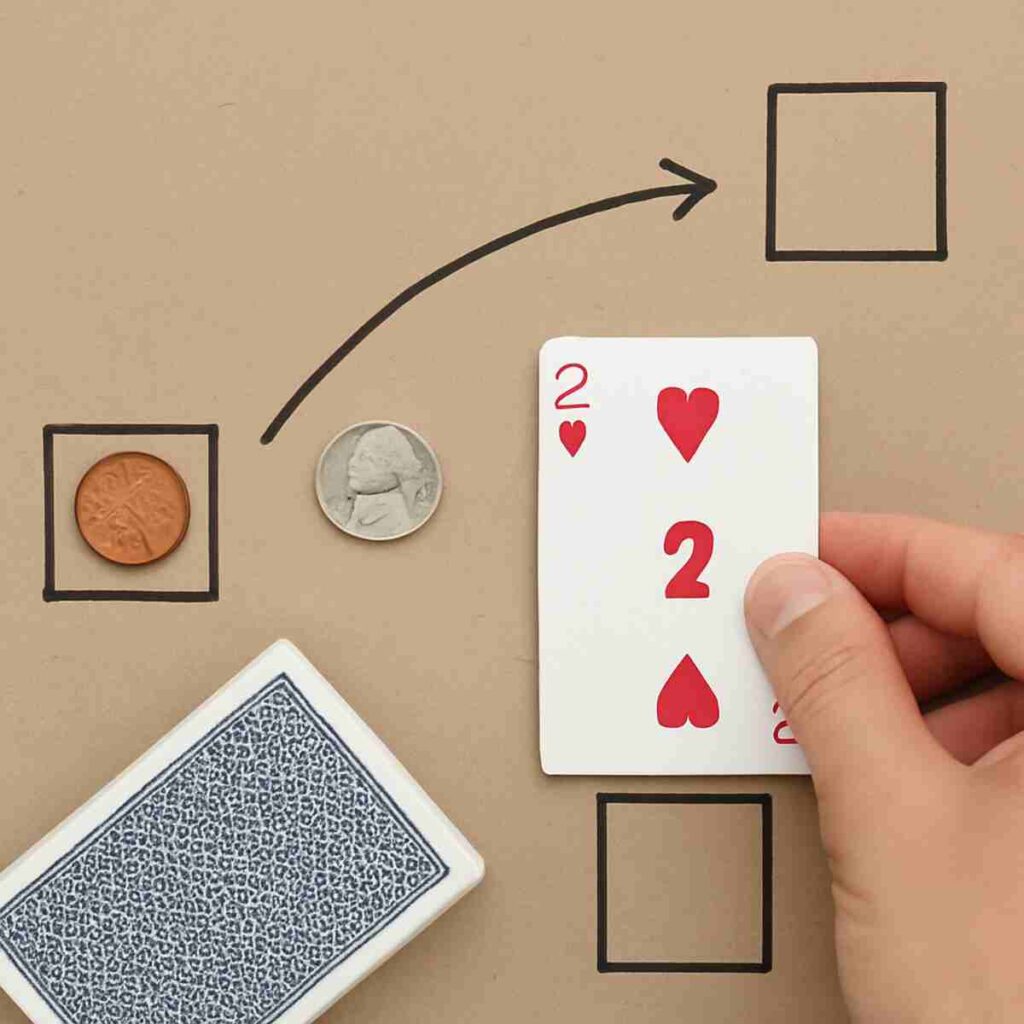
So, how does a runner actually score? To score one run, a runner must complete the full circuit of the bases: first, second, third, and finally, cross home plate. If you have a runner on third and your next card is an Ace (a single), they only need to move one base. That advancement takes them across home plate! As soon as that happens, you’ve scored. Grab your scoresheet and give yourself a tally mark. That’s one run for your team.
You keep taking turns at bat, hoping to chain together enough hits to score as many runs as possible before your luck runs out and you get an out.
What Is an Inning and How Do You Win?
Just like in real baseball, drawing a card that results in an out isn’t the end of your turn. You simply set the out card aside and keep drawing. The goal is to string together as many hits and runs as possible. Your time “at bat” only ends when you’ve collected a total of three outs. As soon as you draw that third out card, your half of the inning is over. It’s time to tally up any runs you scored and pass the deck to your opponent.
When your turn at bat is over, the roles are reversed. Now it’s the other player’s turn to try and score. They will take the deck and begin drawing cards, counting their own hits, outs, and runs until they also get three outs. Once both of you have had a chance to bat, you have officially completed one full inning.
This cycle of both players batting continues. After the first inning is complete, you simply start the second one, then the third, and so on. If you run out of cards, just gather up all the used cards, give them a good shuffle, and continue the inning. Most people play a full game of nine innings, which gives both players plenty of chances to make a comeback. Keeping a running tally on paper is the easiest way to keep score.
After nine innings, the game is over. Each player counts up their total score from all the innings combined. The player who scored the most runs is the winner. It’s that simple.
Let’s Play! A Full Sample Inning Walkthrough
Seeing how the rules fit together makes the game click. Let’s walk through a sample half-inning. Imagine you’ve just shuffled the deck and are the first player to bat. You draw your first card.
It’s an Ace! That’s a single, so you have a runner on first base. Feeling confident, you draw the next card for your second batter. It’s a King—your first out. No one moves, but the pressure is on. The situation is now: one runner on first base and one out.
Your next draw is a 2, which is a double. Your new batter goes to second base, and your runner who was on first gets to advance two bases, landing safely on third. Suddenly, you have runners on second and third with only one out.
The very next card you draw is a 4—a home run! This clears the bases. The runner on third scores. The runner on second scores. And your batter who hit the home run also scores. In one fell swoop, you’ve added 3 runs to your total for the inning. The bases are now empty again, but you’ve done the damage.
Your luck, however, finally runs out. Your next draw is a Queen (your second out), and the card after that is another King (your third and final out). With three outs recorded, your turn is over. You write down “3” on the scoresheet for this inning and hand the deck to your opponent. Now it’s their turn to try and beat your score.
Can You Play Card Game Baseball Solo?
Absolutely! One of the best things about card game baseball is that it works perfectly as a solo activity. The rules for hits, outs, and moving runners don’t change at all. You still shuffle the deck, draw cards, and try to bring your players home. You are your own one-person team playing against the deck.
Instead of competing against another person, your objective is to score as many runs as you can over nine innings. You’ll play through all nine innings by yourself, seeing just how high you can push your score before the final out. Think of it as your own personal home run derby where your only opponent is the luck of the draw.
The real fun of playing solo comes from challenging yourself to beat your own records. Did you manage to score 8 runs in your last game? This time, shoot for 10! It’s a relaxing way to pass the time and provides a satisfying personal goal.
Making it Official: Your Printable Scoresheet
Whether you’re challenging a friend or trying to beat your own solo record, keeping score is half the fun. It turns a casual game into a real competition. A simple, hand-drawn grid is the perfect way to track the action and prevent any confusion about who’s ahead.
To get started, simply grab a piece of paper and a pen and draw this basic grid. This layout gives you everything you need for a full nine-inning game:— | INN 1 | INN 2 | INN 3 | INN 4 | INN 5 | INN 6 | INN 7 | INN 8 | INN 9 | FINAL Player 1 | | | | | | | | | | Player 2 | | | | | | | | | |
At the end of each player’s turn at bat, write down how many runs they scored in the box for that inning. This grid tells the story of your game, showing who won the third inning or if you’re mounting a comeback in the eighth. Tallying up the runs at the end gives you a clear winner and bragging rights.
Your First Game Awaits
You’ve just transformed a simple deck of cards into a personal ballpark. Where once there were just numbers and suits, you now see singles, strikeouts, and game-winning home runs. You are fully equipped to play your first game.
Don’t feel pressured to remember every single rule perfectly. The real goal isn’t perfect rule-following on your first try—it’s to have fun. This game is enjoyable for baseball fans and newcomers alike because of its simplicity.
So grab that deck, clear a space on the table, and deal out your first pitch. You have everything you need to start right now. Play ball!